

Event Planning
Digital ticketing vs. paper ticketing: a comparison
Compare digital and paper ticketing: costs, security, accessibility, scalability, and environmental impact to choose the best option for your event.

January 6th, 2026
•
16 min read
Digital ticketing vs. paper ticketing: a comparison
Deciding between digital and paper ticketing can impact costs, attendee satisfaction, and environmental outcomes. Here's the key takeaway: Digital ticketing offers speed, convenience, and real-time data, while paper tickets cater to offline audiences and provide a tangible keepsake. The choice depends on your event size, audience preferences, and operational needs.
Key Points:
- Digital Tickets: Instant delivery, lower costs, eco-friendly, real-time updates, and better fraud prevention.
- Paper Tickets: No tech required, ideal for older or offline audiences, sentimental value, but higher costs and risks of loss or damage.
- Market Trends: 71% of tickets are sold online, and the digital ticketing market is growing at 7.6% annually.
Quick Comparison:
| Factor | Digital Ticketing | Paper Ticketing |
|---|---|---|
| Cost | Lower setup and delivery costs | Higher printing and mailing costs |
| Convenience | Instant access, easy sharing | No tech required, physical proof |
| Security | QR/barcode validation, encryption | Prone to loss, counterfeiting risks |
| Scalability | Real-time capacity tracking | Limited by manual processes |
| Eco Impact | Paperless, reduces waste | Adds to paper and resource use |
| Audience Fit | Tech-savvy, smartphone users | Offline, older demographics |
| Keepsake Value | Low | High, sentimental appeal |
Both options have pros and cons. For large events, digital tickets streamline operations. For smaller or community-focused events, paper tickets may better suit the audience. A hybrid approach can combine the strengths of both.
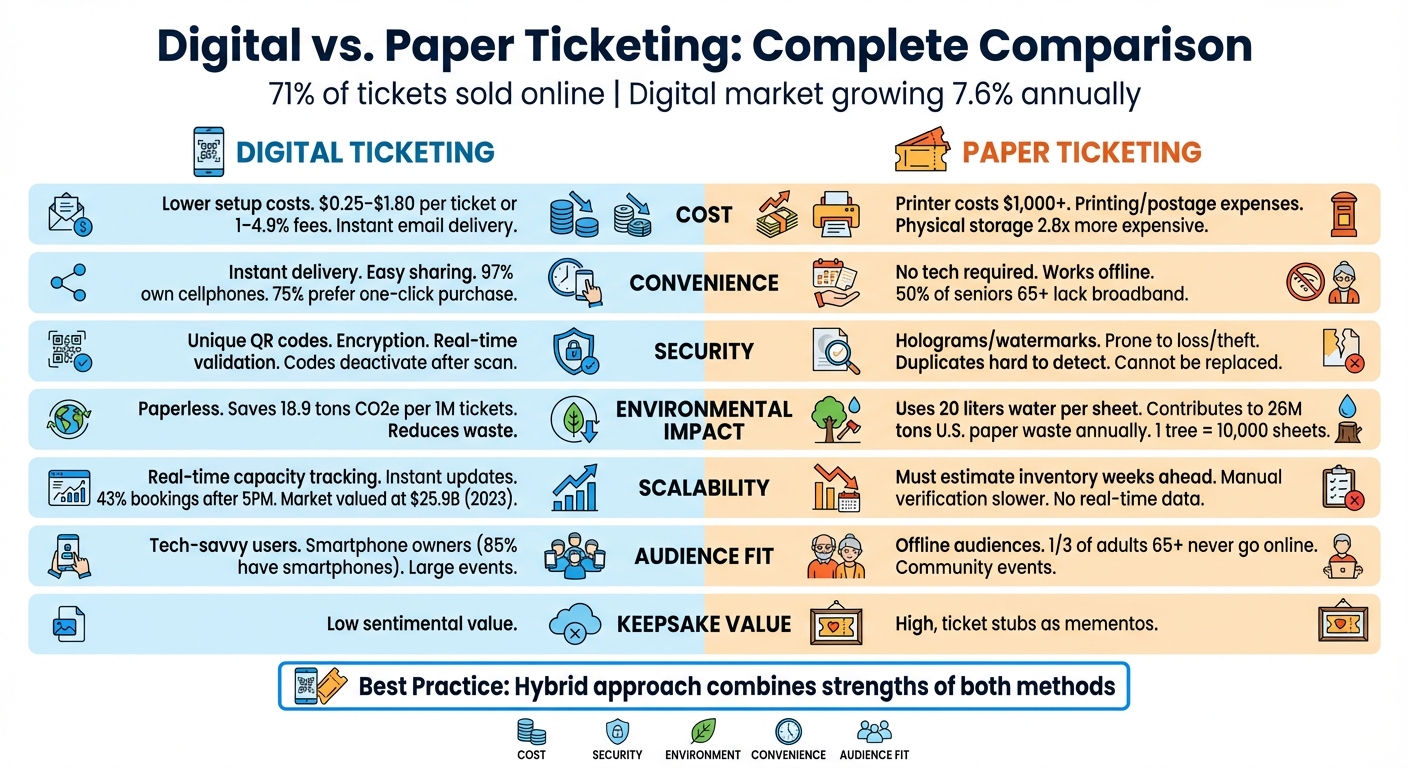
Digital vs Paper Ticketing Comparison: Costs, Security, and Environmental Impact
Teams, venues say goodbye to paper tickets
Digital Ticketing vs. Paper Ticketing: The Basics
Digital and paper ticketing differ in how they’re delivered and used for event entry. These differences shape the overall experience for attendees. Let’s dive into the details of each method.
What is Digital Ticketing?
Digital ticketing relies on electronic documents stored on devices. Once purchased, these tickets are delivered instantly, often as a PDF or through an app, complete with a QR code or barcode for scanning at the event entrance.
"An e-ticket (electronic ticket) is a paperless electronic document for events like concerts or flights." - TechTarget
Many digital tickets can also be saved in digital wallets, allowing offline access. With 97% of U.S. adults owning a cellphone and 85% owning a smartphone, most attendees already have the tools needed to use digital tickets. Because these tickets are tied to user accounts and stored in databases, they can be retrieved across multiple devices.
To enhance security, some systems use dynamic QR codes that change periodically, making it harder for screenshots to be misused. Others delay the release of scannable codes, displaying them only on the day of the event to reduce unauthorized resale.
What is Paper Ticketing?
Paper tickets cater to audiences who may have limited access to digital tools. These are physical tickets printed on cardstock or thermal paper and can be distributed in various ways: mailed directly, bought in person at box offices, or printed at home by the attendee. Entry is verified either manually or by scanning printed barcodes.
Unlike digital tickets, paper versions don’t require any technology at the venue. This makes them ideal for certain groups, especially since one-third of adults over 65 rarely go online. Additionally, paper tickets often hold sentimental value.
"Holding a ticket printed on sturdy, smooth finish card stock is satisfying. After admission, ticket stubs can live on as mementos." - Eventgroove
However, paper tickets come with their own set of challenges. They can be lost, stolen, or damaged by weather, as they’re physical items that require careful handling.
Cost Comparison
Ticketing costs go beyond initial setup - they shape how you allocate your budget. By breaking down the expenses of each system, you can make better financial decisions for your events.
Digital Ticketing Costs
Digital ticketing involves an upfront investment in software or a platform, but it removes many physical costs. Forget about buying specialized paper, ink cartridges, envelopes, or paying for postage. Tickets are delivered instantly via email or app at no additional cost. Some platforms even offer subscription plans with no commission fees on unlimited ticket sales.
"Digital tickets aren't just more convenient for your attendees. They also help you cut down on costs." - Nicole Menendez, Eventbrite
Recurring costs for digital systems include platform fees, payment processing, software updates, and cloud hosting. On the plus side, these systems automatically collect attendee data - like age, location, and interests - saving you money on future marketing efforts by building a ready-to-use email list. With 71% of ticket purchases now happening online, digital ticketing matches how most people prefer to buy tickets today.
Paper Ticketing Costs
Paper tickets come with higher recurring expenses. For example, a Boca printer alone costs over $1,000, not to mention the ongoing need for thermal paper and maintenance. Printing tickets requires high-quality card stock, ink, and sometimes anti-fraud materials to prevent counterfeiting.
"Custom printed tickets require special equipment, like a Boca printer, to produce, they require design work, and they are expensive." - Kat Rembacki, GoPassage
Distribution adds another layer of expense: envelopes, stamps, and manual labor for packaging and mailing. Additionally, physical storage costs are 2.8 times higher than digital storage. Labor costs can also pile up since staff must handle sales, distribution, and manual ticket verification at the event. One way to offset printing costs is by selling advertising space on the back of ticket stubs.
Cost Comparison Table
| Cost Category | Digital Ticketing | Paper Ticketing |
|---|---|---|
| Setup Costs | Software subscription or platform fees | Specialized printers ($1,000+) and design work |
| Distribution | Instant delivery via email or app; no postage | Envelopes, stamps, and manual labor for mailing |
| Materials | None | Recurring costs for card stock, ink, and anti-fraud paper |
| Maintenance | Software updates and cloud hosting fees | Hardware repair, printer cleaning, and storage |
| Security | Unique QR codes/barcodes; lower fraud risk | Anti-fraud paper to prevent counterfeiting |
Environmental Impact
Every ticket issued carries an environmental cost. By weighing the differences between digital and paper ticketing, you can make choices that better align with sustainability efforts.
Digital Ticketing and the Environment
Digital ticketing eliminates the need for paper, ink, and envelopes, significantly cutting down on physical waste. For instance, issuing one million digital tickets can save about 18.9 tons of CO2e. This is a meaningful reduction, especially considering that paper waste contributes approximately 26 million tons to U.S. landfills annually.
"Paper tickets have a greater carbon footprint and impact on the environment. Digital tickets reduce the need for paper as the ticket exists only in a digital format on fans' devices." - Lyubomyr Nykyforuk, Solution Architect, Softjourn
However, digital systems are not entirely without environmental impact. They rely on data centers, which consume energy continuously, and the devices used to access digital tickets contribute to the growing issue of global e-waste. Alarmingly, only 17.4% of electronic devices are recycled worldwide. Despite these challenges, digital ticketing remains the more environmentally friendly option, particularly when printing is avoided, highlighting the stark difference between digital convenience and the resource-intensive nature of physical tickets.
Paper Ticketing and the Environment
Paper tickets require a hefty amount of natural resources. Producing just one A4 sheet can use up to 20 liters of water. The process is energy-intensive, involves chemicals, and generates greenhouse gases. To put it into perspective, a single tree yields about 10,000 sheets of paper, meaning large events that switch to digital can save numerous trees.
"Going paperless can help to prevent deforestation, preserve energy and water, and also avoid excess waste from accumulating in our landfills." - Stephanie Safdie, US Copywriter, Greenly
While 68% of paper was recycled in the U.S. in 2022, a significant portion - nearly one-third - still ends up in landfills. For those who must use paper tickets, eco-friendly alternatives like recycled cardstock and soy- or water-based inks can minimize environmental harm by reducing chemical runoff and improving recyclability.
User Convenience and Accessibility
How people access and use tickets often depends on their comfort with technology, internet availability, and individual preferences. Recognizing these differences helps identify the best ticketing options for different audiences.
Digital Ticket Convenience
Digital tickets are delivered instantly via email or an app, saving users from waiting for mail or visiting a physical box office. With most Americans owning a smartphone, accessing tickets immediately after purchase has never been easier. Features like Apple Wallet and Google Pay integration make retrieval even simpler - no more digging through emails at the venue entrance.
One big perk of digital tickets is how easily they can be shared. Forwarding tickets via email allows others to access them without hassle, which is especially helpful for group events or last-minute changes. Plus, digital tickets eliminate concerns about losing a physical ticket or damage from bad weather. Stored securely in the cloud, they can be re-downloaded anytime.
Another advantage is real-time updates. Whether it’s a seat upgrade, a venue change, or a time adjustment, digital tickets stay current. Scanning a QR code is also faster and more reliable than dealing with worn or damaged paper tickets. In fact, 75% of consumers say they’re more likely to buy a ticket if the process can be completed with just one click. This level of efficiency helps streamline event management, reducing entry delays and administrative headaches.
Despite these benefits, many still prefer the simplicity and familiarity of paper tickets.
Paper Ticket Advantages
While digital tickets offer speed and flexibility, paper tickets remain a vital option for those less comfortable with technology. For example, 50% of adults aged 65 and older lack home broadband, and one-third of that group never uses the internet. Paper tickets provide a dependable, tech-free alternative that doesn’t rely on battery life, WiFi, or digital know-how.
Paper tickets are practical in any situation - no worries about dead phone batteries, malfunctioning screens, or connectivity issues in crowded venues. They’re also great for kids attending events without smartphones or for anyone who prefers a physical proof of purchase. And let’s not forget their sentimental value. Many fans cherish ticket stubs as keepsakes from memorable events. This nostalgia has even inspired a creative trend where people design their own "souvenir" tickets.
"Digital tickets are the future, but that doesn't necessarily mean that they're right for your event. It's about your attendees." - Purplepass
With 29% of tickets still being purchased offline, paper tickets remain an important option for reaching audiences who might otherwise be excluded by digital-only systems.
sbb-itb-8eb1bfa
Security and Fraud Prevention
Ticket security varies significantly between digital systems and paper-based methods, each offering distinct advantages and challenges.
Digital Ticketing Security
Digital tickets rely on unique QR codes or barcodes tied to a cloud-based system. Once scanned, these codes are instantly marked as used, making duplicates ineffective. This real-time validation allows event organizers to quickly identify fraud attempts, such as multiple people trying to use the same ticket.
To protect user data, digital systems use encryption and tokenization, ensuring information cannot be copied or misused. When tickets are stored in apps like Apple Wallet or Google Pay, they gain an extra layer of security through device authentication - such as biometrics or PINs.
"Because every code is unique, digital tickets help mitigate security risks like counterfeit tickets - which means less headaches and more revenues for event creators." - Nicole Menendez, Writer, Eventbrite
However, digital tickets are not without risks. They depend on reliable technology, and disruptions like WiFi outages or scanner malfunctions can bring entry operations to a standstill. While data breaches are rare due to encryption, they remain a potential concern.
Though digital systems provide robust, automated security, physical tickets rely on entirely different mechanisms.
Paper Ticket Security
Paper tickets use features like sequential numbering, barcodes, and advanced printing techniques - such as holograms and watermarks - to ensure authenticity and deter counterfeiting. However, they are vulnerable to physical loss or damage, and unlike digital tickets, they cannot be reissued once misplaced.
Another common issue with paper tickets is photocopying. Without real-time validation, duplicates can be created and used fraudulently before the rightful owner arrives. Fraud detection for paper tickets often happens only after the event.
Additionally, lost or stolen paper tickets can be easily misused, as there is no way to tie them to a specific individual or verify ownership at the venue.
Security Comparison Table
Here’s a breakdown of the key security features for digital and paper tickets:
| Feature | Digital Ticketing | Paper Ticketing |
|---|---|---|
| Duplication Prevention | Codes deactivate after first scan | Relies on physical features; duplicates hard to detect until used |
| Theft Risk | Low; encrypted, password-protected storage | High; physical loss, theft, or damage |
| Data Protection | Encryption and tokenization | Minimal protection for purchaser information |
| Validation | Instant via cloud-connected scanners | Manual or offline; prone to delays |
| Fraud Detection | Real-time monitoring | Post-event discovery |
| Loss Recovery | Re-downloadable via email | Typically cannot be replaced |
Scalability and Real-Time Management
Managing large crowds and adapting to ever-changing event conditions are key challenges where digital and paper ticketing systems differ significantly. As events grow in size and expectations evolve, these differences become increasingly critical for organizers.
Digital Ticketing Scalability
Digital ticketing removes physical limitations, allowing ticket sales to remain open until the very last moment - even as late as the start of the main event. For instance, in August 2023, Harpoon Brewery utilized digital ticketing with QR code scanning for their Octoberfest beer festival, significantly reducing entry times for nearly 12,000 attendees.
With digital platforms, purchases, arrivals, and add-ons are synced in real time, giving organizers instant insights into venue capacity. This is invaluable, especially considering that over 43% of bookings happen after 5 PM. Additionally, last-minute changes - whether it’s rescheduling an event or reassigning seats - are instantly reflected on attendees’ devices. Self-service portals further streamline the process, allowing guests to modify bookings on their own without burdening administrative teams. This level of efficiency has helped propel the digital ticketing market, which was valued at $25.9 billion in 2023 and is projected to grow to $53.7 billion by 2033.
"This was our first foray into using mobile tickets at Lovebox and Citadel and we're pleased to say it was huge success. It was one of the most effortless experiences we've had getting fans on site, and quick, too." - Rory Bett, CEO of Lovebox and Citadel promoter MAMA
These advantages stand in stark contrast to the challenges posed by traditional paper ticketing.
Paper Ticketing Scalability Limits
Paper ticketing comes with inherent challenges that make scaling difficult. Organizers must estimate ticket inventory weeks in advance, which can lead to waste if too many are printed or delays if too few are produced, requiring rushed reprints. Once tickets are printed or mailed, making adjustments to event details or seating arrangements becomes nearly impossible without issuing entirely new tickets.
The logistics of paper tickets also add complexity. Tickets need to be mailed well before the event, and manual verification at entry gates can slow down the check-in process. Issues like damaged, folded, or torn tickets only add to these delays. Without access to real-time data, organizers cannot efficiently monitor crowd flow at busy entry points or reallocate staff to where they’re needed most.
These limitations highlight why digital systems are increasingly favored for modern events.
Choosing the Right Ticketing Method
When selecting a ticketing method, it’s all about balancing factors like cost, convenience, security, and accessibility with the scale of your event and the needs of your audience. The right choice depends on who your attendees are and how your event operates.
For example, older adults - especially those who aren’t tech-savvy or lack regular internet access - may prefer physical tickets. If more than 30% of your audience falls into this category, offering physical tickets is a smart move. On the other hand, digital tickets are perfect for tech-savvy crowds, especially considering that 97% of Americans own a cellphone and 85% have a smartphone.
When to Use Digital Ticketing
Digital ticketing shines at large events like festivals, concerts, or sports games. It speeds up entry and provides real-time data on attendance. Many major festivals have reported smoother entry processes with digital tickets. One festival CEO even noted, “It was one of the most effortless experiences we’ve had getting fans on site, and quick, too”.
If reducing waste is important to your event, digital ticketing also eliminates the need for paper, making it a more eco-conscious option.
When to Use Paper Ticketing
Paper tickets are a better fit for smaller, community-focused events or those catering to older, offline audiences. They don’t rely on WiFi, charged devices, or troubleshooting at the gate. Plus, custom-printed tickets can double as keepsakes, adding a personal touch and reinforcing your event’s branding.
Since no single method works for every event, many organizers now use a hybrid system - offering both digital and paper tickets. This ensures accessibility for all attendees while still benefiting from the advantages of digital ticketing. As Eventgroove aptly puts it, “The right ticketing type is all about your event’s audience”.
Before going fully digital, make sure your venue has strong, reliable WiFi and that your staff is equipped with mobile scanners. Without the right infrastructure, even the best digital system can cause delays at the gate.
Conclusion
Selecting the right ticketing method comes down to aligning it with your event's goals and the needs of your audience. Digital ticketing shines for large-scale events, offering lower costs, faster entry, and real-time data insights. On the other hand, paper tickets remain a go-to option for attendees who aren’t tech-savvy and as cherished keepsakes that can create a lasting emotional connection.
Statistics highlight the growing trend of digital ticketing, but they also reveal that many seniors still aren’t online. In fact, nearly one-third of adults over 65 never use the internet. This makes paper tickets a critical option for ensuring inclusivity in event planning.
Here’s a quick comparison of the key factors:
| Factor | Digital Ticketing | Paper Ticketing |
|---|---|---|
| Cost Structure | Lower upfront costs; $0.25–$1.80 per ticket or 1–4.9% in fees | Higher upfront costs for printing, paper, and postage |
| Environmental Impact | Paperless; reduces waste | Adds to 26M tons of U.S. paper waste annually |
| Accessibility | Requires smartphone/internet access | No tech needed; works for everyone |
| Security | Dynamic QR codes, encryption, scan-out features | Holograms, UV ink; easier to lose or damage |
| Entry Speed | Quick scanning; minimizes delays | Can vary; damaged tickets may cause slowdowns |
| Data Collection | Real-time analytics and attendance tracking | Limited to manual tracking |
| Scalability | Instantly scalable for large events | Challenging without integrated software |
| Keepsake Value | Low unless paired with NFTs or digital assets | High; doubles as a physical memento |
The best ticketing solution isn’t about picking one method over the other but finding the right balance based on your event’s specific needs. Consider your audience demographics, event size, and operational setup. For events with offline attendees, paper tickets can ensure accessibility, while tech-savvy audiences will appreciate the speed and convenience of digital options.
Before finalizing your approach, assess factors like WiFi availability and the tech comfort level of your attendees. Combining both methods might be the smartest move, offering flexibility while maximizing inclusivity and efficiency.
FAQs
What are the main advantages of digital tickets compared to paper tickets?
Digital tickets come with several advantages that make them a smart alternative to traditional paper tickets:
- Instant delivery and easy access: Forget waiting for the mail or scrambling to print tickets. Digital tickets are sent straight to your email or a mobile app and conveniently stored on your smartphone - making them nearly impossible to misplace.
- Faster entry and added convenience: With scannable QR codes or barcodes, checking in becomes a breeze. This not only speeds up entry but also enhances the overall event experience by cutting down on long lines.
- Savings and sustainability: Say goodbye to printing and shipping costs. Digital tickets are cost-effective and help reduce paper waste, making them a more environmentally friendly option.
- Real-time updates and flexibility: Need to make last-minute changes? Digital tickets can be updated instantly for schedule adjustments or venue changes. Plus, they allow for last-minute sales, helping organizers maximize revenue.
- Improved security: Counterfeit tickets are a thing of the past. Digital verification makes it much harder to duplicate or forge tickets, offering greater peace of mind.
With these perks, it’s no surprise that digital ticketing has become a go-to solution for events of all sizes, blending convenience with modern efficiency.
What are the environmental benefits of digital ticketing compared to paper tickets?
Digital ticketing comes with several environmental perks that paper tickets simply can't match. By doing away with the need for printing, shipping, and disposing of physical tickets, it significantly reduces paper usage, conserves trees, and minimizes waste. Plus, it eliminates energy-heavy processes like printing with chemical inks and relying on transportation powered by fossil fuels - practices often tied to traditional ticketing systems.
By cutting back on paper use and reducing greenhouse gas emissions, digital ticketing shrinks the overall carbon footprint of events. This makes it a smarter, greener option for both event organizers and attendees.
What should I consider when choosing between digital and paper tickets for my event?
When choosing between digital tickets and paper tickets, it's essential to weigh factors like your audience, budget, and event requirements.
Digital tickets offer convenience and efficiency. They can be sent instantly, cut down on entry lines with QR code scanning, and are more secure thanks to encryption and real-time validation. These are perfect for tech-savvy attendees and larger events where speed and fraud prevention are key.
On the flip side, paper tickets bring a tangible, personal touch. They can be customized for branding or kept as keepsakes, making them a great fit for events aimed at older audiences or those without easy access to digital devices. However, they do come with the added costs of printing and the risk of generating waste.
Consider your attendees’ preferences, the size of your event, and your environmental goals to decide which ticketing option fits your needs best.